Heat pump power consumption: How much electricity does a heat pump use?
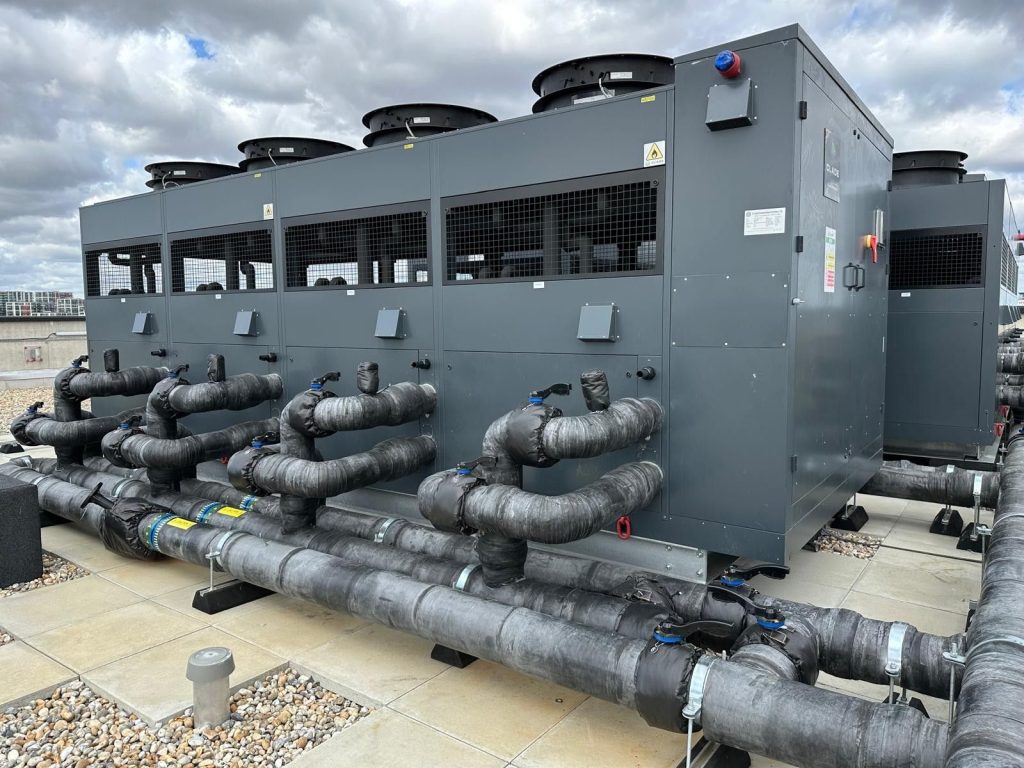
Heat pumps work by absorbing heat energy from the environment and compressing it into high-grade heat that can be delivered through a heating distribution system.
However, to do this, they rely on a small amount of electricity.
Here, we’ll answer all your questions about heat pump power consumption – from how much electricity a heat pump actually uses, to the factors that affect electricity usage.
How much electricity does a heat pump use?
Heat pumps use much less electrical energy than they produce in heat energy.
This is because they don’t need to work to generate heat from scratch. Instead, they simply transfer heat energy from one place to another.
In fact, just 30% of the energy used by an air source heat pump is provided by electricity. The rest is generated by the environment for free.
This means that heat pumps are extremely efficient. They typically reach around 300% efficiency compared to the most efficient gas boilers, which only reach around 98% efficiency.
Calculating air source heat pump power consumption
It’s impossible to state with certainty exactly how much electricity a heat pump uses.
After all, it’ll depend on lots of site-specific factors, like a heat pump’s size, controls, ambient temperatures, and even refrigerant.
Here are the main factors you’ll need to consider when calculating air source heat pump power consumption.
Efficiency rating
Heat pump efficiency is measured by its Coefficient of Performance (COP), which is the ratio of heating capacity and total power input.
As an example, a COP of 2.5 indicates that, at a steady rate, you generate 2.5 kW of heating capacity by using 1 kW of electric power.
At Clade, we typically see COPs between 3 and 4 in our heat pumps, although this can vary depending on factors like ambient temperatures, which brings us onto…
Ambient temperatures
The colder it is outside, the harder a heat pump will have to work to achieve the required flow temperature.
This means that heat pump power consumption will be higher on cold days and lower on warm days.
A heat pump’s Seasonal Coefficient of Performance (SCOP) is a measure that aims to take into account temperature variances across the year to give you an idea of how efficiency averages out across the seasons.
Outlet temperature
As a rough guide, the higher the outlet temperature, the more work the compressor inside the heat pump has to do to achieve the required temperature. This increases energy usage.
With this in mind, heat pumps usually use less power when they’re paired with emitters that have a larger surface area (and therefore that require a lower inlet temperature) – like underfloor heating or larger radiators.
Just bear in mind that there are exceptions. For instance, our CO2 heat pumps are actually more efficient at higher output temperatures because of the unique thermodynamic properties of CO2. Head over to our blog on high temperature heat pumps to learn more.
Heating needs
How you use your heat pump system – and what you require of it – can affect your energy usage.
As an example, you might have a big heating demand at a certain time of day.
Likewise, some buildings need a heat pump for space heating only, while others need one for both space heating and domestic hot water.
Factors like these affect what size heat pump you need and how hard your heat pump has to work to meet your needs. Which brings us onto…
Heating pump size
Your heat pump must be properly sized to your building’s heating needs.
A heat pump that’s too small will increase your electricity usage as it will run constantly, trying (and likely failing) to reach your temperature requirements.
However, a heat pump that’s too big will be no good either. This will lead to it running short cycles that risk leading to costly repairs and early replacement.
Your system designer will be able to properly size your commercial heat pump, taking into account your heating needs and other requirements.
Refrigerant
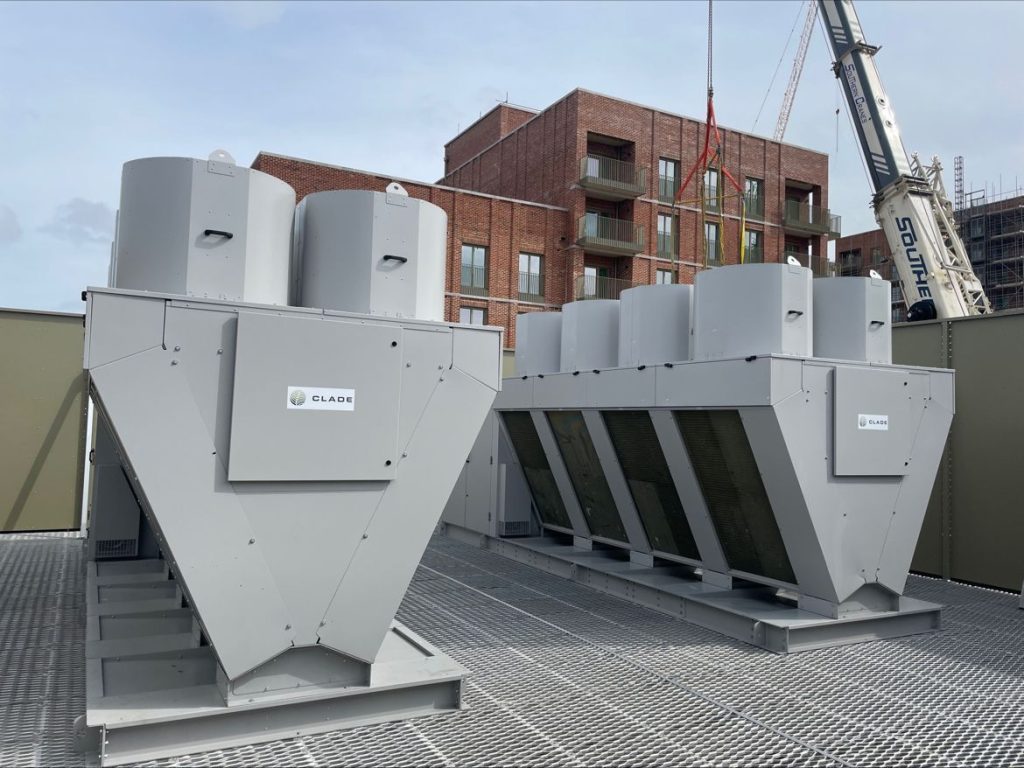
Different refrigerants have different levels of efficiency. So, your choice of heat pump refrigerant can affect your overall energy usage.
Refrigerants are largely split into two groups: synthetic (mostly F-gases) and natural.
Natural refrigerants tend to be more efficient in heat pumps as they have no glide. This is a thermodynamic behaviour found in some synthetic refrigerants.
At Clade, we only use natural refrigerants, as not only are they highly efficient, but they’re also vastly better for the environment.
Operation
How your heat pump is operated on-site will also impact your electricity consumption.
For instance, frequently adjusting thermostats, setting domestic hot water temperatures too high, or frequent stop-start cycling can all lead to inefficiencies and increased energy usage.
Maintenance
A well-maintained heat pump will be more efficient.
Regular servicing is crucial for maintaining heat pump efficiency, and therefore lowering power consumption (and energy bills!).
How to reduce your heat pump’s energy consumption
If your heat pump isn’t quite getting the COPs you expect, this could be down to a few factors:
- Differences in ambient temperature and humidity from what was designed
- Maintenance and operational factors
- Design and installation quality
While the first is to be expected to some extent (after all, COP measurements are very finely tuned and can be affected by things like sensor sensitivity), the second is something that can be honed to reduce your heat pump’s energy consumption.
Maintenance
Properly maintaining your heat pump can help you improve its efficiency and reduce your energy usage.
Light maintenance tasks that can keep your heat pump in the best condition include:
- Checking that airflow isn’t blocked by dust or debris
- Occasionally cleaning the fan blades
- Replacing filters when needed
You should also ensure that your heat pump is serviced at least once a year, ideally twice.
During a service, your engineer will assess your heat pump’s overall energy efficiency and may make adjustments to help reduce energy consumption.
Plus, they’ll be able to identify and fix any issues with your heat pump to make sure that it continues working as efficiently as possible between services.
At Clade, we offer heat pump servicing and maintenance as well as installation and design services.
Operation
How you operate your heat pump can lead to inefficiencies that can impact energy usage.
As a general guide, consistent, low-temperature settings are more efficient than frequent adjustments.
A buffer tank can also help by minimising the number of stop-start cycles.
A building management system (BMS) can monitor your heating system and flag any inefficiencies, empowering operators with clear, actionable insights so they can optimise performance.
At Clade, most of our heat pumps are also remote monitoring enabled, which means our team in Leeds can keep a close eye on how your heat pump is performing and make any necessary adjustments to improve efficiency from afar.
Air source heat pumps and electricity consumption: final thoughts
Although there are many factors that can affect air source heat pump electricity consumption, one thing’s sure: heat pumps still use very little electricity!
They’re also a lot more efficient than other heating systems like traditional boilers.
The problem lies in the current cost of electricity.
Although a heat pump can reduce your energy bills significantly, electricity is still around four times pricier than gas.
Luckily, we can expect this cost to decrease as the UK gets more and more of its electricity from renewable sources. Plus, the electrification of heat opens up the opportunity to make use of grid flexibility, which can cut your energy bills drastically.
Alternatively, you could consider pairing your commercial heat pump with a renewable energy source such as solar panels. Doing so could see you reducing your energy bills to zero.
Ultimately, switching from a boiler to a heat pump allows businesses to reduce their power consumption and, when used smartly, organisations can benefit from additional flexibility and cost savings.
Talk to us about heat pump power usage
Considering investing in a commercial heat pump? Want to understand what your power usage would look like?
Our team of experienced engineers can take the time to understand your requirements before designing a bespoke heat pump system that can heat your building as efficiently as possible.
Just get in touch with our team to start the ball rolling.