Heat pumps and solar panels: a dream pairing for commercial sites
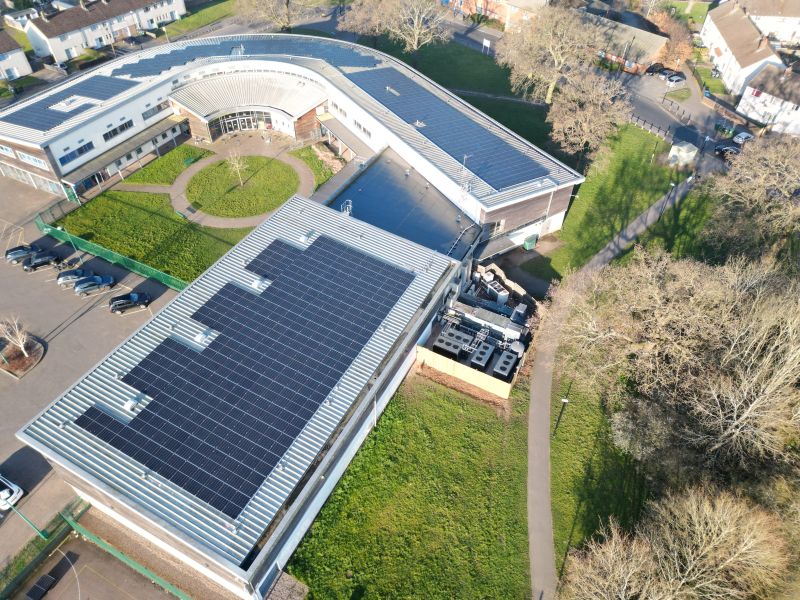
There’s only one thing better than a heat pump: a heat pump paired with solar panels!
By using solar panels to power a commercial air source heat pump, sites can cut emissions, stabilise running costs, and future-proof operations even further.
Here, we’ll explore why an air source heat pump and solar panels are a match made in heaven, and how the two work together.
Solar panels and heat pumps: how they work
Solar panels work by harnessing the power of the sun to turn it into usable electricity for your building.
They do this using photovoltaic (PV) cells. When sunlight hits the cells, this generates an electrical current that can be used to turn on lights, heat water, power electric cars, and more.
Meanwhile, heat pumps work by absorbing heat energy from the environment and compressing it into high-grade heat that can be delivered through a heating distribution system, such as radiators or underfloor heating. To do this, they use a small amount of electricity.
While most heat pump systems take this electricity from the national grid, you can also generate it on-site using a renewable energy system like solar panels or wind turbines.
Why pair an air source heat pump with solar panels?
Heat pumps and solar panels are both excellent renewable energy systems in their own rights.
But by pairing them together, you can make them both more valuable.
Although heat pumps don’t use much electricity, buying electricity from the national grid is expensive.
On the other hand, generating your own electricity using solar panels means you can power your heat pump completely for free. So, the only running costs you have to contend with are servicing and maintenance.
Likewise, generating your own electricity reduces your carbon footprint even further.
Even though heat pumps are a sustainable heating system, the national grid still largely relies on fossil fuels to generate electricity (although the proportion of fossil-fuel-generated energy is reducing).
Meanwhile, using solar panels to power your heat pump can reduce your building’s emissions to zero.
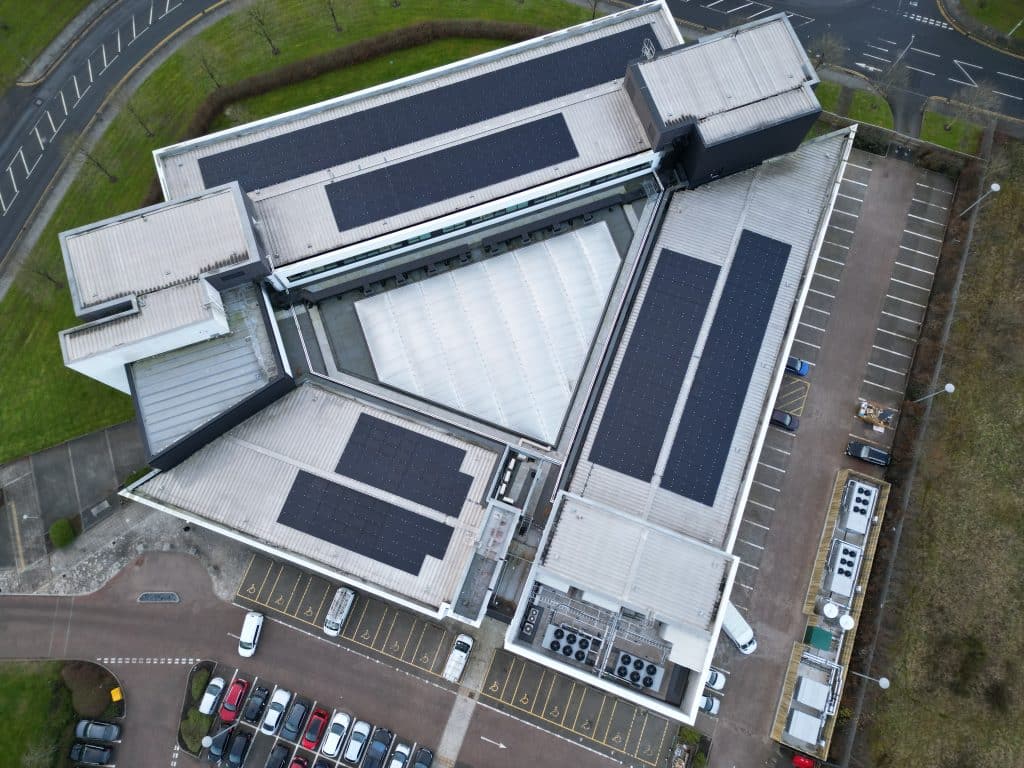
What are the benefits of solar heat pump systems?
Using a heat pump to heat your commercial building comes with so many benefits, even without solar panels – from lower running costs to increased energy efficiency and lower carbon emissions.
But pairing a heat pump with solar panels adds several more advantages to the already long list:
- On-site generation is cheaper than grid power
- Even lower carbon intensity of heat
- Heat pumps can absorb all the excess electricity generated, ensuring no spill to grid at low value
- When combined with storage (thermal or batteries), even more flexibility is built into the system
- Futureproofs operations, as the system won’t be affected by regulations concerning the decarbonisation of heating
- Financing is available to cover both heat pumps and solar PV for a one-stop shop
What are the disadvantages of solar energy heat pump systems?
The main disadvantage of combining a heat pump and solar panels is cost – both heat pumps and solar panels require a significant upfront investment.
Luckily, there are schemes, tax breaks, and financing options available to help encourage businesses to adopt renewable energy systems like these – including our finance offering that can cover both heat pumps and solar panels for a one-stop shop.
Another potential disadvantage is that, while solar panels can generate electricity year-round, they can’t generate electricity when there’s no sunlight – for instance, in the dark or on very cloudy days.
This means that, without storage, you’d end up sending any excess electricity back to the grid on sunny days, and then drawing from the national grid to power your heat pump when sunlight is harder to find.
In other words, if you want to be able to power your heat pump solely through solar energy, the right storage is a must. Which brings us onto…
The importance of storage for heat pump and solar panel combinations
Without storage, businesses will be left relying on the national grid to power their heat pump during hours of darkness or on particularly cloudy days.
However, storage in the form of batteries or thermal storage can be a game-changer, allowing businesses to power their heat pump purely using solar energy.
With batteries, excess energy generated on sunny days can be used to charge a battery instead of being sent back to the grid, for use later down the line when the sun is playing hard to get.
Likewise, with thermal storage, excess electricity can be absorbed by your heat pump and used to heat water which is then stored in a buffer tank, ready to warm up your building at another time.
In this way, you get maximum flexibility. You can…
- Use the electricity generated to heat your building when you want
- Avoid spill to the grid at low value
- Keep your energy savings high
- Reduce your reliance on the national grid
Tackling the cost of a heat pump with solar panels
The cost of combining a heat pump and solar panels can vary widely depending on the needs of each business.
Factors include things like:
- The size of your business premises
- How well your building is insulated
- System power and efficiency
- Required room temperature
- Whether you use a heat pump for hot water, space heating, or both
- Whether you’re retrofitting the system or incorporating it in a new build
However, there’s no denying that heat pumps and solar panels both require a significant upfront investment – especially when the two are combined!
The good news is that there is financial support available.
In Scotland, small and medium-sized enterprises (SMEs) can apply for an SME loan of up to £100k to help pay for energy and carbon-saving upgrades.
If you’re eligible, you could also receive a cashback grant of up to £30,000 to help towards your costs.
Other incentives available to UK organisations include the Social Housing Decarbonisation Fund (SHDF) and tax breaks under the HMT expensing policy.
At Clade, we’re also proud to be able to help businesses spread out the upfront cost of both heat pumps and solar panels with commercial heat pump financing.
Either way, it’s important to factor in not just upfront costs but also running costs when you’re budgeting for these systems.
Not only are heat pumps much more efficient than traditional boilers, but when combined with solar panels, businesses can generate the electricity needed to power their system completely for free!
This means businesses can expect to make back their initial upfront investment costs in the long term.
Let’s talk about air source heat pumps and solar panels
Keen to explore a heat pump and solar panel pairing to heat your business premises?
You’re in the right place!
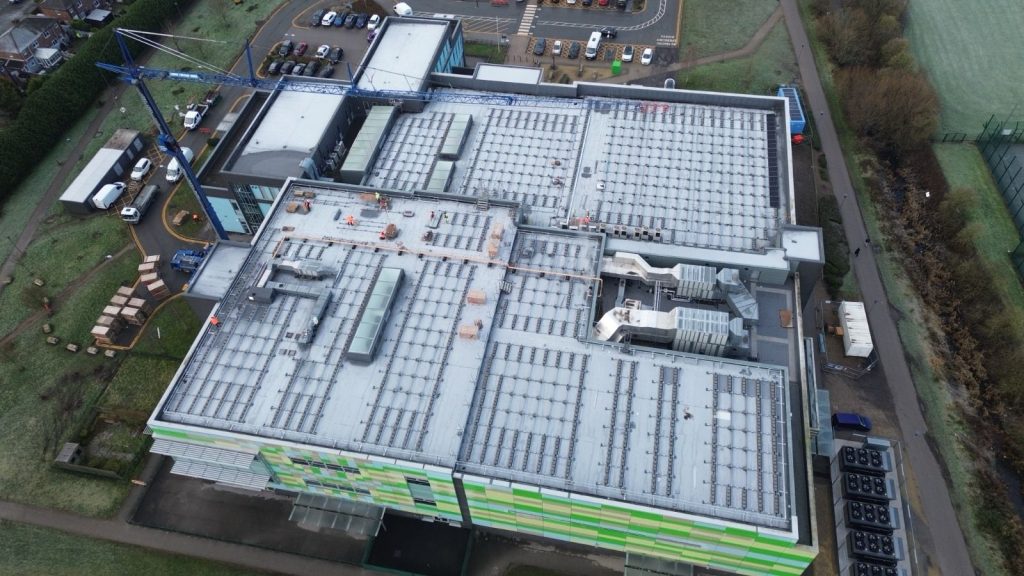
At Clade, we have over 35 years of experience working with natural refrigerant heat pump and refrigeration systems, and have recently installed several heat pump systems powered by solar PV.
Just get in touch to learn more and start the ball rolling.