What are the pros and cons of air source heat pumps?
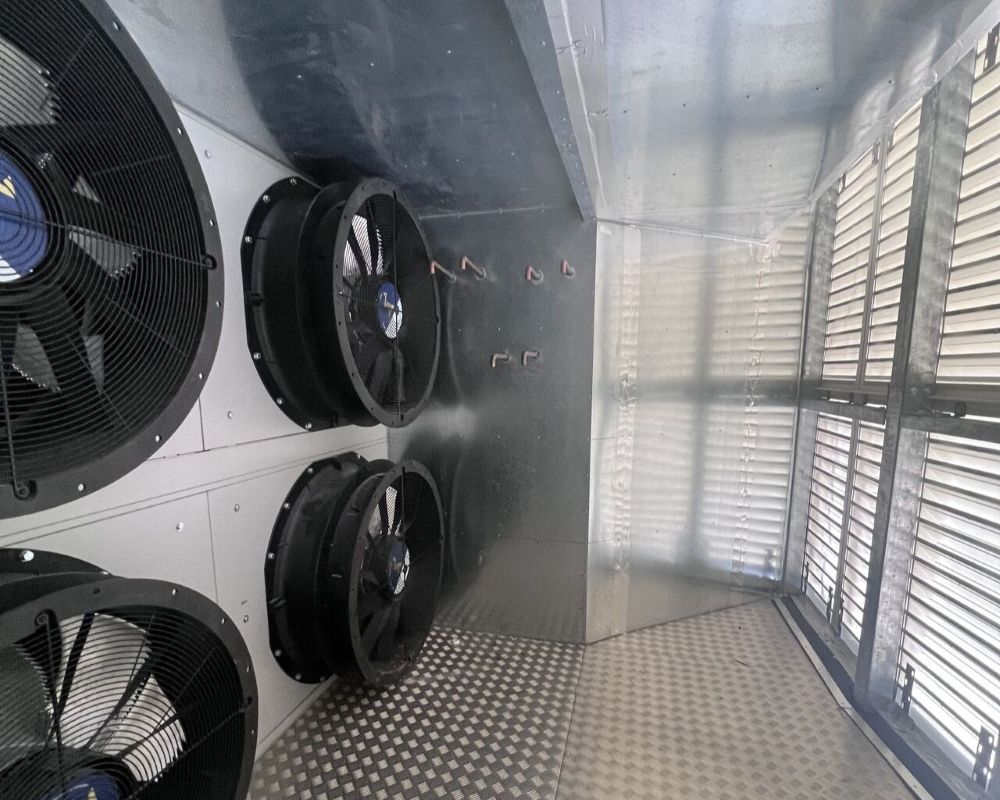
Air source heat pumps are gaining a lot of attention as an eco-friendly alternative to traditional gas boilers.
But that’s not their only strength.
Rather, air source heat pumps come with a ton of benefits – from efficiency to longevity and even lower running costs.
And of course, like any heating system, they also have a few downsides.
Here, we’ll explore the pros and cons of air source heat pumps so that you can make an informed decision if you’re considering switching your commercial heating system for a heat pump.
Benefits of air source heat pumps
First things first, let’s look at the main benefits of air source heat pumps – from those that are probably already on your radar, to some that you might be completely unaware of.
1. Efficient
Air source heat pumps are an efficient way to heat your business premises.
In fact, they’re around three or four times more efficient than gas boilers!
While the most efficient boilers can reach around 98% efficiency, air source heat pumps can reach a whopping 300% efficiency.
This is because heat pumps don’t actually create heat from scratch. Rather, they transfer heat from one place to another using a small amount of electricity, which is far more energy efficient.
2. Low energy bills
Another big advantage of heat pumps – especially for businesses looking to lower their operating costs – is lower energy bills.
Although electricity is currently more expensive than gas, heat pumps only use a small amount of electricity to run, thanks to how efficient they are.
In fact, just 25% of the energy used by an air source heat pump is typically provided by electricity. The rest is generated by the environment for free!
Businesses that choose to switch to a heat pump will also have the opportunity to benefit from grid flexibility – using power at times when it’s cheap.
Oversizing your thermal store makes this an even better opportunity, and can dramatically cut utility costs by up to 20%.
3. Environmentally friendly
As you probably already know, heat pumps are widely recognised as an environmentally friendly heating method.
This is because of two things:
- They’re sustainable (they use the air to provide heat, which is a natural energy source)
- They don’t produce emissions
Although some of the UK’s electricity is still generated by fossil fuels, the proportion of renewable energy supplied to the National Grid is increasing all the time. The decarbonisation of our grid electricity is one of the great British successes in recent years.
Plus, you could choose to reduce your carbon footprint even more by powering your heat pump using solar power or other renewable energy sources.
Just watch out when it comes to choosing a heat pump refrigerant.
Synthetic refrigerants are usually harmful F-gases, which have a high global warming potential (GWP) and release harmful forever chemicals called PFAS into the environment.
On the other hand, natural refrigerants (like those we use here at Clade) are low GWP, clean and non-toxic – making them a no-brainer for both people and the plant.
4. Long lifespan
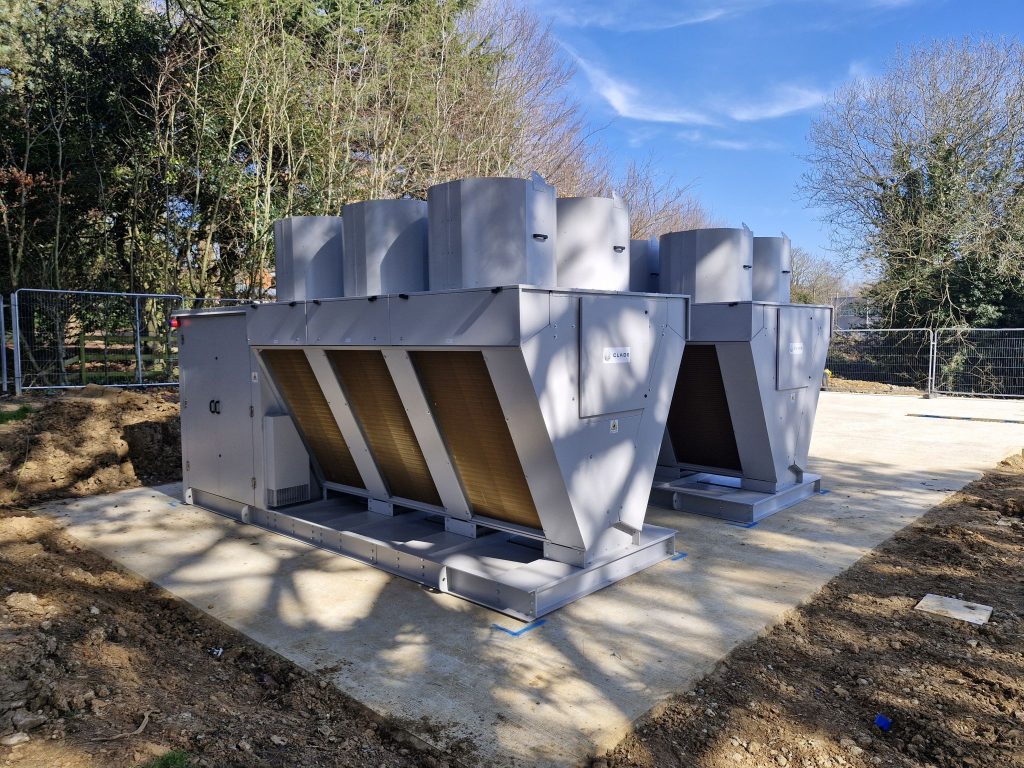
Did you know that heat pumps typically last double the lifespan of gas boilers?
While a domestic boiler will typically only last for around 10 to 12 years, a heat pump should last for over 20.
This is because heat pumps have a robust design with fewer moving parts.
That said, regular heat pump servicing is still important to keep your heat pump in optimal condition and maintain its efficiency for as long as possible.
5. Reliable
Many people worry that air source heat pumps won’t be able to operate effectively when it’s cold outside. But this isn’t the case at all.
Rather, air source heat pumps can maintain consistent indoor temperatures throughout the year, regardless of variable ambient conditions.
It’s true that, when the temperature of the air outside drops, the compressor inside your heat pump needs to work harder to reach the required flow temperature.
However, a heat pump’s Seasonal Coefficient of Performance (SCOP) is a measure of efficiency that takes into account the fact that ambient temperatures vary throughout the year, by averaging out the heat generated and the electricity used.
Generally speaking, heat pumps should be expected to generate SCOPs of 2.5 or higher. This means that, across the year, you should expect to generate at least 2.5 kW of heating capacity by using 1 kW of electric power.
In this way, you can get an estimated overall efficiency that should give you confidence your heat pump will perform well throughout the year – whatever the ambient temperature.
Head over to our blog on R290 heat pump performance to see some real-world data of one of our heat pumps in action.
6. Versatile
Other common misconceptions are that heat pumps are only suited to providing space heating – or that they can only be used in new builds.
But in reality, heat pumps are incredibly versatile.
Not only can they be a great solution for domestic hot water (DHW), but retrofitting a heat pump is achievable in most buildings.
At Clade, we’ve supplied heat pumps to schools, libraries, office buildings, factories and even swimming pools – in new and old buildings alike (browse our case studies for examples).
In fact, we’ve even developed a new high temperature heat pump called the Elm. As the UK’s first direct boiler replacement heat pump, it’s designed for buildings where the existing infrastructure can’t easily be adapted, such as listed buildings or healthcare facilities.
In this way, heat pumps are a flexible option for businesses and industries of all kinds.
7. Futureproof
Switching to a heat pump from a fossil fuel-powered system is a great way to prevent your heating system from becoming a stranded asset in the near future.
Let us explain.
With climate change a major issue in today’s world, boiler bans are already in place in 11 countries (according to Nesta).
As the decarbonisation of heat continues to move up the government’s priority list, it’s safe to say that opting for a renewable heating source like a heat pump will enable you to safeguard your heating system’s longevity.
There are some tightening F-gas regulations to be aware of if you choose a synthetic refrigerant heat pump.
But by simply opting for natural refrigerants, you can gain peace of mind that you’ll be able to use your heat pump worry-free for its entire lifespan.
8. No fuel deliveries
If your building isn’t connected to the gas network, a traditional gas boiler won’t be an option.
Instead, you’re likely relying on alternative fuels such as oil or LPG. These fuels need to be delivered, which can be costly and time-consuming.
Not only that, but they need to be stored on-site, taking up valuable space.
A heat pump is a fantastic solution that doesn’t require fuel deliveries.
Instead of relying on fossil fuels, your system will generate heat using the surrounding environment (and a small amount of electricity) – removing the need for fuel to be delivered and stored.
9. Controllable
Heat pumps are easy to use and can also integrate with a range of controls – including as part of a wider climate-controlled system.
At Clade, the majority of our heat pumps are remote-monitoring and smart enabled too.
That means our experienced team can monitor your heat pump’s performance remotely from our headquarters in Leeds and make any necessary adjustments for you.
In this way, you can be confident that your heat pump can meet changing heating demands and requirements – and that it’s operating as efficiently as possible.
10. Demonstrate corporate responsibility
Corporate responsibility (CR) or corporate social responsibility (CSR) is about the impact an organisation has on society, the environment and the economy.
In today’s world, being able to demonstrate that a business has a positive impact on the world around it is becoming increasingly important.
To give you an idea, more than half of customers in the UK – and 75% of Gen Z – want companies to take a stand on issues they’re passionate about (according to Accenture).
Meanwhile, 64% of millennials would refuse a job from an employer without a strong CSR policy (according to Cone Communications).
By swapping a fossil-fuel-powered heating system for a heat pump, businesses can demonstrate that they’re taking steps to make positive changes to the way they run their organisation – and reassure clients of their commitment to the environment.
In this way, it can become a powerful marketing tool.

Air source heat pump disadvantages
Like anything good in life, air source heat pumps also have a few disadvantages. Here are the main downsides to be aware of.
1. Upfront costs
Firstly, air source heat pumps require a significant upfront investment.
In fact, The Guardian estimates that the supply and installation cost of a heat pump is around four or five times more than for a gas boiler (although we can expect to see this gap close over time).
This is largely because, despite its rapid expansion, heat pump technology is still relatively new.
That said, it’s important to remember that despite high upfront costs, air source heat pumps can cost a lot less to run than their fossil-fuel counterparts – especially for businesses that make use of flexible energy tariffs.
Likewise, there are financial incentives available to encourage organisations to make the switch – including:
- Public Sector Decarbonisation Scheme (PSDS)
- Clean Heat Grant
- Boiler Upgrade Scheme (BUS)
- Social Housing Decarbonisation Fund (SHDF)
- Tax breaks
Most of these (other than tax breaks) are only available to public-sector organisations. However, the majority of businesses could also get help making the switch through our heat pump financing offering.
This ‘heat-as-a-service’ offering allows businesses to spread out the cost of switching to a heat pump over 15 years, with a simple monthly fee that includes a full service package, emergency engineer callouts and automated digital reporting.
2. May require upgrades to your building
It’s possible to retrofit a heat pump in almost any building.
However, most buildings will require some upgrades to maximise the potential of a heat pump system.
This might include:
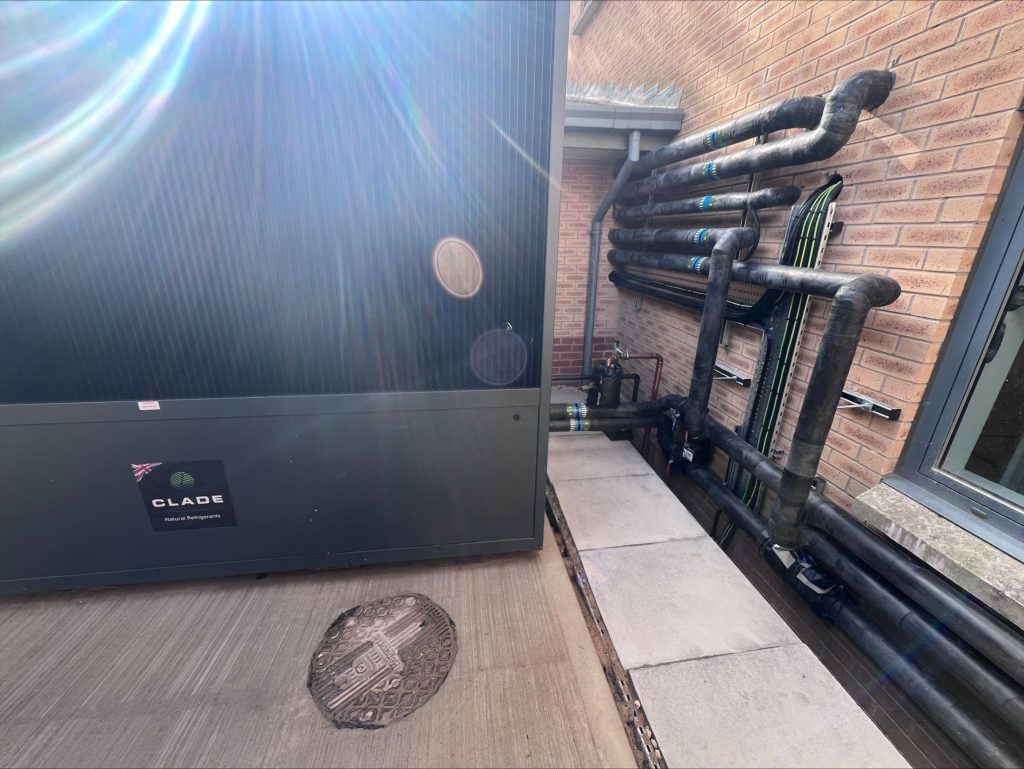
- Emitters. Heat pumps typically (but not always) run at lower flow temperatures than boilers, meaning they tend to require larger emitters (eg. radiators, AHU coils etc.) for the same heat output.
- Pipework. Depending on your building’s existing heating system and the refrigerant used in your heat pump, you may need to upgrade your pipework.
- Insulation. Upgrading your building’s insulation can reduce heat loss, therefore reducing the size of heat pump needed and the energy bills for operating it (although heat pumps are available in any size and can meet any heat demand).
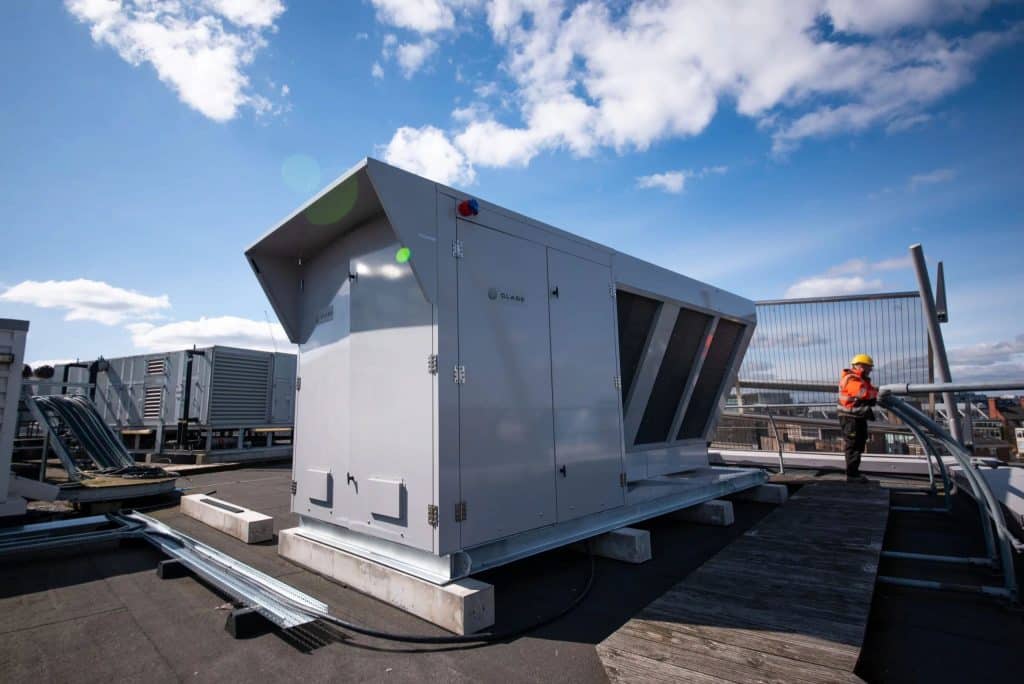
Depending on where you decide to locate your heat pump and other associated equipment, like buffer tanks, you may also need to repurpose certain areas of your premises.
As an example, you may need to remove car parking spaces.
That said, bear in mind that, if it isn’t possible to make upgrades to your building, you may still be able to benefit from a heat pump.
Our Elm heat pump works as a direct boiler replacement and is designed especially for buildings where the existing infrastructure can’t easily be amended.
3. Less familiar
Unlike gas boilers, heat pumps are still a relatively new technology.
To put that into perspective for you, around 1.7 million domestic-scale natural gas boilers are installed in the UK every year (according to the Department for Business, Energy & Industrial Strategy).
Meanwhile, as of 2024, the number of certified heat pump installations completed in UK homes has reached a total of 250,000 (according to Current).
While this is a huge step forward, the difference is still stark.
What this means is that gas boilers are still a technology that most of us are familiar with. Not only are we comfortable with them, but it doesn’t take much brainpower for most of us to work out how to use them.
On the other hand, for the majority of people, heat pumps are unknown territory.
Although they are very easy to control, they can take a bit of getting used to and there can be an element of fear to overcome too.
However, our team of experts is on hand to make the transition as seamless and worry-free as possible, and can even provide training to help your team to understand how to use your business’ new heating system.
Ultimately, once you’ve made the leap, you won’t look back!
Are air source heat pumps worth it?
Yes! Air source heat pumps are definitely worth it.
Not only will you benefit from reducing your carbon footprint, but you’ll also get an efficient, reliable and versatile heating system that costs less to run and will last you long into the future.
Although heat pumps require a significant upfront investment, there is financial support available to help organisations make the switch, including our heat-as-a-service offering.
Plus, the reduction in your energy bills should see you make the money back in the long run.
Ultimately, a natural refrigerant heat pump is a better option for your business, society and the planet we live on, making it a no-brainer!
Talk to us about commercial air source heat pumps
As you can see, there are pros and cons to air source heat pumps. But the positives far outweigh the negatives.
If you’re ready to make the switch to a green heating system, you’re in the right place.
At Clade, we have over 35 years of experience working with natural refrigerant heat pump and refrigeration systems.
We also offer a complete end-to-end service, meaning we can design, manufacture, install and even maintain your business’ new heat pump system to make the whole process as seamless as possible.
This is just one of the ways in which we constantly strive to do heat pumps better here at Clade, and to help our clients make the shift to Net Zero.
Just get in touch to learn more and start the ball rolling.