Is my building suitable for a heat pump?
4 Questions to Ask Before You Call the Pros
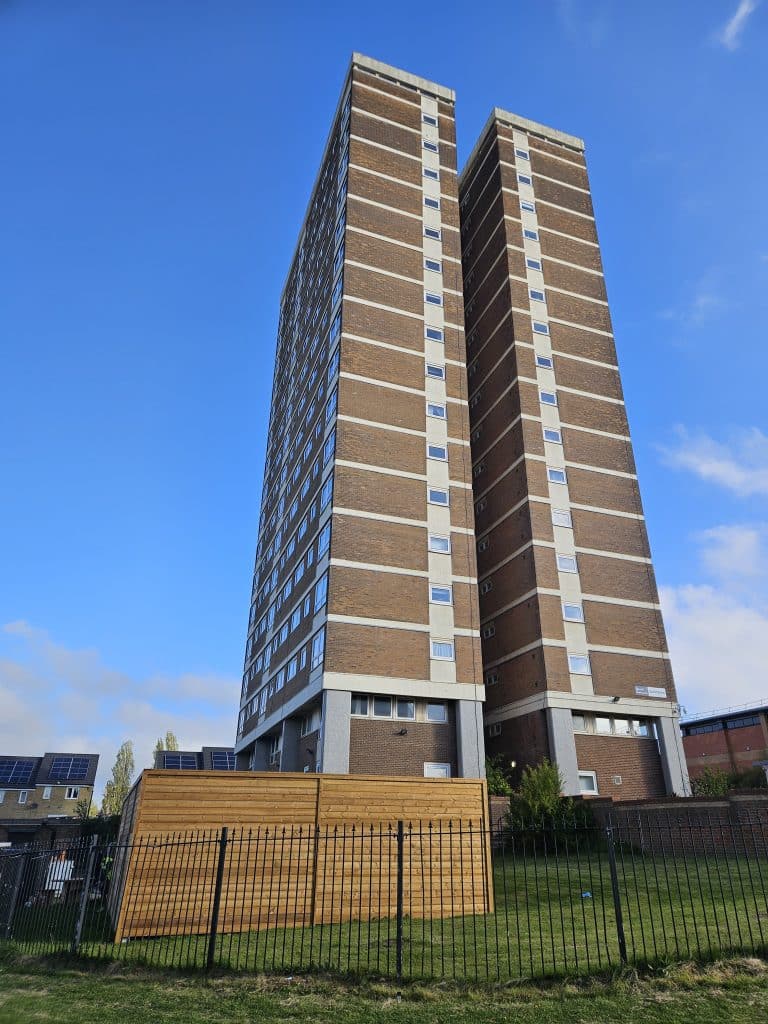
So, you’re looking at transitioning your building away from gas and toward a greener future. You’ve heard the buzz about heat pumps, but you aren’t sure if your building is “ready” or if the project will even fit.
As a building services engineer, I’ve seen everything from “perfect fit” installs to “this is going to be a logistical puzzle.” While a final decision always requires a professional survey, you don’t need a degree in thermodynamics to do a quick sanity check.
Here are the four big questions you should ask to see if a heat pump is a viable option for your property.
1. How much “oomph” do you actually need?
Before looking at equipment, we need to know the load. A common mistake is assuming you need a heat pump exactly the same size as your current boiler.
-
The 50–70% Rule: Most gas boilers are significantly oversized. A good starting point is estimating that you’ll need about 50% to 70% of your current boiler’s capacity. You can find your current capacity on the data plate attached to your boiler.
-
The Modern Shortcut: If you have access to your half-hourly gas data, you can feed that into an AI tool to calculate your peak demand. It’s remarkably accurate and gives us a “real-world” number rather than a theoretical one.
2. Where is it going to live?
This is the only potential “deal-breaker.” For most medium-sized buildings, you need an area roughly 10m x 10m—or about the size of 6 parking spaces.
-
Car Parks: These are the “Goldilocks” zones. They are accessible, easy to work on, and have plenty of airflow.
-
The Roof: This is a solid option if the structure can handle the weight and there is safe access for a technician carrying a heavy toolbox. If you already have other machinery up there, that’s usually a good sign.
-
Proximity: Ideally, the unit sits near your existing plantroom. However, don’t panic if it’s far away; we can run pipes a long distance, either underground or overhead, to get the heat where it needs to go.
3. Does the building have the “juice”?
Heat pumps run on electricity, and they can be thirsty. Checking your electrical supply is the hardest part to do visually, but look for these “green flags”:
-
Spare Capacity: Take a look at your main electrical switchboard. Are there empty slots (spare panels)? That’s a very good sign.
-
The Transformer: Is there a large electrical transformer nearby (often in a locked room or a fenced-off compound)? If the power source is close, upgrading your supply is much easier.
4. Who are the neighbors?
Heat pumps aren’t “loud,” but they do move a lot of air, which creates a hum. We need to consider noise sensitivity.
-
The 50m Rule: If there are residential buildings or noise-sensitive offices within 50 meters, we need to be strategic.
-
Mitigation: The closer those windows are, the more we have to look into “low-noise” technology or acoustic attenuation (sound shielding). It’s rarely a deal-breaker, but it does add to the budget.
The Bottom Line
While there are other technical details—like your radiators (emitters), refrigerant choices, and control systems—these four questions will tell you if you’re in the ballpark.
If you have the space, a decent electrical supply, and a spot that won’t keep the neighbors awake, you’re likely looking at a very feasible project. Just remember: none of this replaces a professional site survey, but it certainly gives you a head start!
Ready to dig deeper into your building’s data? Reach out to us at Clade to turn these “first passes” into a definitive plan.