Heat pumps only work for new builds: fact or fiction?
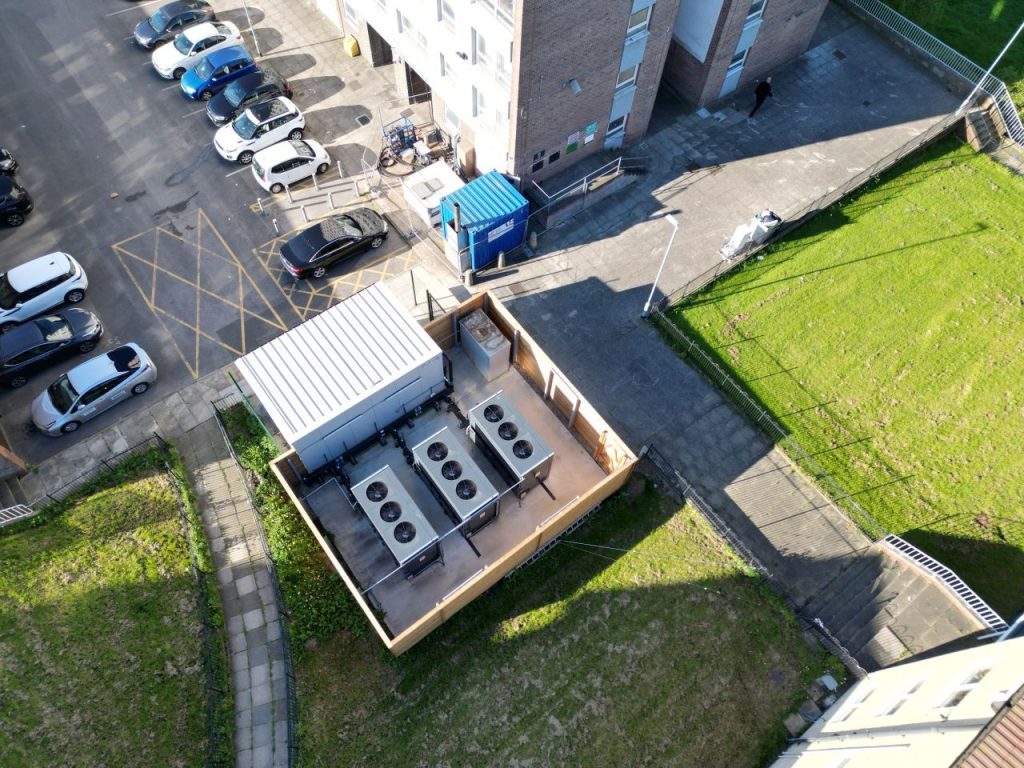
A common misconception about heat pumps is that they only work for new builds.
In reality, heat pumps can be a superb source of space heating and hot water for buildings of all kinds – including old and listed buildings.
In fact, at Clade, we supply commercial heat pumps for retrofit projects all the time.
Here’s all you need to know.
Most buildings are suitable for a heat pump
Installing a heat pump in a new build is particularly easy as you can design the whole building infrastructure around low flow temperatures.
But this doesn’t mean that existing buildings are unsuitable for a heat pump.
The truth is that heat pumps can heat almost any building. At Clade, we’ve worked on retrofit projects ranging from schools and libraries to offices and leisure centres!
So, instead of asking whether a heat pump can heat a building, the question should usually be around the finer details – like what flow temperature would be required, what emitter sizes would be needed, and whether it would be the most economical solution.
This way, you can establish not just whether a heat pump can match the demands of the building, but whether it can do so while meeting the aspirations of the owner or operator.
Retrofitting a heat pump is easier than you might think
Retrofitting a heat pump can be a lot more straightforward than you might expect.
The key to minimising disruption and keeping costs down is usually to choose a refrigerant that operates at conditions similar to traditional gas boilers (assuming that’s the legacy heating source).
This includes refrigerants that are capable of reaching high temperatures or operating at a familiar Delta T (that’s the difference between the flow and return temperatures).
At Clade, we frequently recommend R290 for retrofit projects, as it operates at a Delta T close to that used by boilers. Our R290 heat pumps can even maintain these Delta Ts while producing high temperatures up to 80℃.
This means that very few changes typically need to be made to the existing building infrastructure to accommodate the new heat pump.
It’s often a case of simply upgrading pipework and switching to larger emitters to achieve the same heat output. However, if needed, you can often keep the existing radiators too, which is ideal for listed or historic buildings looking for a low carbon heating system.
That brings us onto…
Retrofitting listed buildings or settings that require continuous operation
If you’re dealing with a listed building, a building in a conservation area, or a healthcare setting where continuous operation is vital, heat pump installation can be a little more complicated.
However, it’s still possible. Here’s how.
1. High flow temperatures
While most heat pumps operate best at low flow temperatures, natural refrigerants have rewritten the rulebook.
As we’ve touched upon already, modern air source heat pumps (like our natural refrigerant heat pumps here at Clade) are capable of delivering high flow temperatures up to 80°C while maintaining a decent coefficient of performance (COP).
This makes it possible to integrate the heat pump into existing systems without the need to replace existing pipework and emitters.
2. Hybrid systems
A hybrid system can give buildings the best of both worlds.
A heat pump provides low-carbon heating for the majority of the year, while a back-up boiler supports periods of peak demand or higher flow temperature requirements.
In some configurations, the boiler can boost the temperature of water that’s already been heated by the heat pump, allowing existing radiators and pipework to continue operating effectively.
This can remove the need for infrastructure changes while helping businesses take meaningful steps towards decarbonisation.

3. Continuous operation
Most of the time, you can keep the old boiler in operation right up until the new heat pump is commissioned, so that businesses can continue to operate as normal throughout the installation process.
Our work with David Lloyd Clubs, Harrogate was a great example of this.
We managed to replace the health club’s gas boilers with two R290 heat pumps without any impact on the heating and hot water provision, and without disruption to the club’s members.
Head to the case study for the full story.
The verdict: fact or fiction?
So, is it true that heat pumps only work for new builds?
Absolutely not!
While opting for a heat pump as part of a new build project is a no brainer, they’re not the only buildings that can benefit.
With the right system design, commercial heat pumps can be successfully retrofitted into everything from offices and schools to leisure centres and listed buildings.
Even where infrastructure changes aren’t practical, options like high-temperature heat pumps and hybrid systems can help make retrofit possible.
Ultimately, the question isn’t usually whether a heat pump will work in an existing building, but how the system can be designed to work most effectively.
At Clade, our natural refrigerant air source heat pumps have proven successful in countless commercial retrofit projects, allowing businesses to decarbonise with minimal disruption.
Want to learn more? Just get in touch with your local senior sales engineer.