Heat pumps can’t reach high flow temperatures: fact or fiction?
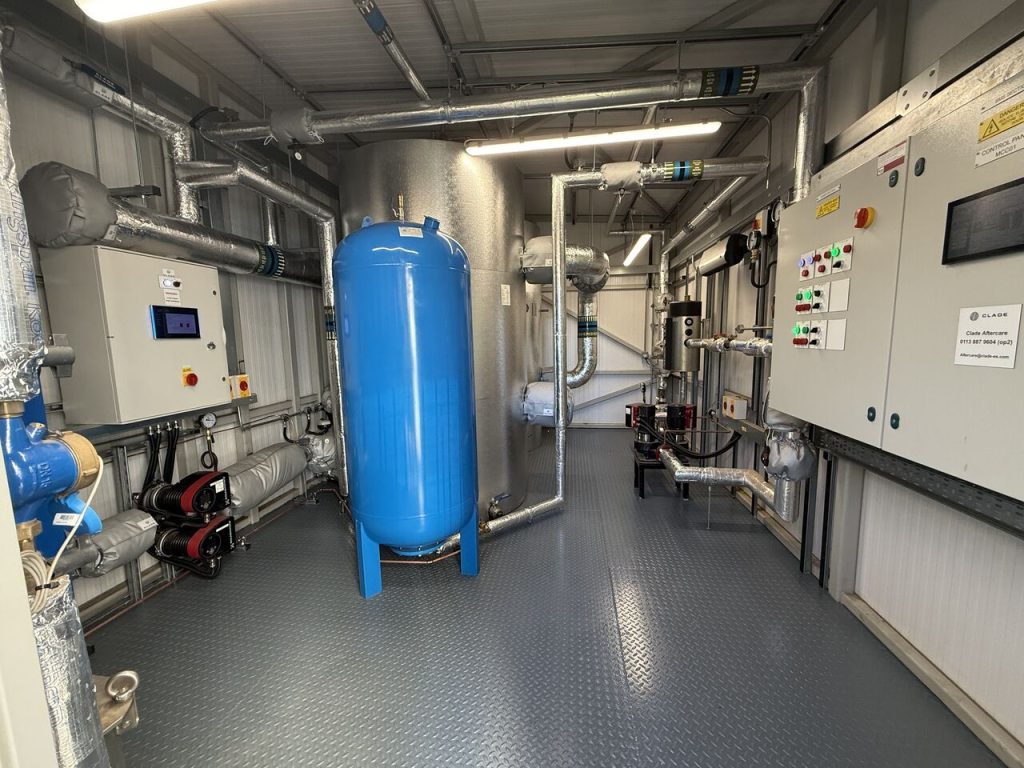
A claim we often hear is that heat pumps can’t achieve high flow temperatures.
While this might have been true in the past, heat pump technology has come a long way. At Clade, our commercial heat pumps can deliver flow temperatures up to 80°C.
Here’s all you need to know.
The myth
For years, the standard narrative was that air source heat pumps could only manage low flow temperatures around 45°C to 55°C.
Heat pumps operating at these low flow temperatures can still effectively provide space heating. But retrofitting a heat pump that operates at these temperatures typically means overhauling the building’s radiators, pipework, pumps and valves to create the same effect as a gas boiler (which is typically set up to operate at 80°C).
The cost of this can be prohibitive to many businesses.
While heat pump technology has come on a lot over the years, the myth persists! And it’s costing businesses a fortune in delayed decarbonisation.
The fact
Modern air source heat pumps can deliver flow temperatures up to 80°C.
This is largely down to the huge shift the industry has made towards natural refrigerants.
Natural refrigerants like CO2 and R290 are able to operate at high flow temperatures while maintaining high coefficient of performance (COPs), even at low ambients.
At Clade, we design and manufacture high-temperature solutions from 105 kW to 132 kW (although our heat pumps can be cascaded to achieve outputs up to 792 kW).
Our CO2 heat pumps can reach flow temperatures up to 80°C. Meanwhile, our R290 heat pumps can also achieve this while maintaining a 10°C temperature differential, to closely match the temperatures produced by traditional gas boilers.
What it means
Being able to hit high flow temperatures puts heat pumps and decarbonisation on the cards for many businesses that may not otherwise consider it due to the CapEx of a full heating system upgrade.
1. Retrofits
The ability to hit high flow temperatures makes it easier to integrate heat pumps into existing commercial heating systems built for higher temperatures.
It protects customers from having to replace existing pipework and emitters, minimising upfront cost and disruption.
2. Domestic hot water (DHW)
In the UK, businesses have a legal duty to store hot water above 60°C to reduce the risk of Legionnaires’ disease.
Clade heat pumps can easily meet this requirement. In fact, their ability to hit even higher temperatures provides a greater safety margin, especially in buildings with stringent water hygiene requirements, like healthcare and hospitality.
Storing hot water at higher temperatures also gives you the added flexibility to get more usable hot water from the same cylinder volume, as it can be mixed with cold water through a thermostatic mixing valve before it reaches taps.
The verdict: fact or fiction?
So, is it true that heat pumps can’t reach high flow temperatures?
Not at all!
While some heat pumps won’t be able to hit high temperatures without sacrificing efficiency, natural refrigerants have completely rewritten the rulebook.
Clade CO2 and R290 heat pumps can reach flow temperatures up to 80°C, even at variable ambient temperatures.
This is a real gamechanger for businesses that want to decarbonise their heating and hot water without the costs associated with overhauling the wider building infrastructure.
Want to talk more about heat pumps as a high-temperature solution?
Just get in touch with your local senior sales engineer.